Deciding how an elderly parent or relative should be cared for is one of the hardest choices a family will ever make. Do you keep them at home with visiting or live-in support, or does a residential care home offer the safety, companionship and structure they now need? There is no single right answer, but there is a right answer for your family’s specific situation.
At JT Care Homes, we speak with families across Preston every week who are wrestling with exactly this decision. This guide walks through how home care and residential care actually differ, so you can make a confident, informed choice.
What Is Home Care?
Home care, sometimes called domiciliary care, means a carer visits your loved one in their own home. Visits can range from a short daily call to help with medication and meals, through to live-in care where a carer stays in the property around the clock.
Home care suits people who are largely independent but need some support, and who place a high value on staying in familiar surroundings. It works well when needs are relatively stable and predictable.
Home care does have limits. Carers are typically not present for the full day unless you pay for live-in support, which can be expensive. Social contact can be limited if a person lives alone, and coordinating multiple visits, medical appointments and household tasks often falls back on family members. As needs become more complex, especially with conditions like advancing dementia, mobility loss or frequent falls, home care can struggle to provide the constant supervision required.
What Is Residential Care?
Residential care means moving into a care home where trained staff are present day and night. Meals, personal care, medication, housekeeping and social activities are all built into daily life, and support is available immediately whenever it is needed rather than at scheduled visit times.
This model tends to suit people who need consistent supervision, who are at risk of falls or wandering, who have complex or changing health needs, or who have become isolated and would benefit from company and structured routine. It also takes a significant amount of pressure off family carers who may have been trying to manage round-the-clock support alone.
At JT Care Homes, our Our Care page sets out the range of support we provide, including full residential care, short-term respite stays, specialised support for more complex needs, and companion-focused care for residents who need lighter-touch support alongside social connection.
Key Differences to Consider
Level of supervision. Home care visits are scheduled. Residential care provides staff on site at all times, which matters greatly for anyone with dementia, mobility problems or a history of falls.
Social contact. Loneliness is one of the biggest hidden risks for older people living alone. Residential care homes build daily social interaction into the routine through group meals, activities and shared spaces, which can meaningfully improve quality of life.
Cost and value. Extensive home care, particularly live-in care, can become very costly, and costs rise sharply as needs increase. Residential care bundles accommodation, meals, personal care and activities into one arrangement, which many families find easier to plan around financially.
Family burden. Home care often still relies on family to cover gaps, manage emergencies and coordinate services. Residential care removes much of that day-to-day responsibility, allowing families to spend time simply being family again rather than acting as care coordinators.
Environment. Some people feel strongly about remaining in their own home for as long as possible, and that preference deserves real weight. Others find a smaller, well-run care home becomes a genuine home in its own right, particularly one that feels close-knit rather than institutional.
Signs It Might Be Time to Consider Residential Care
A few common signals tend to come up in conversations with families:
- Frequent falls or a recent hospital admission
- Increasing confusion, memory loss or a dementia diagnosis
- Struggling to manage medication correctly
- Growing social isolation or signs of low mood
- A family carer who is exhausted, unwell or unable to keep up with demands
- A home that is no longer safe or practical to manage
None of these on their own means residential care is automatically the answer, but together they are worth an honest conversation with your family and your GP.
Why Families in Preston Choose JT Care Homes
JT Care Homes has been family-run since 1984, founded by Jean Titterington and still led by her children today. We are not part of a national chain, and every decision is made with the same care we would want for our own relatives.
We operate three small, close-knit homes across Fulwood, Preston: The Brooklands, Fairmont and Oxford House. Each home supports a maximum of 24 residents, which allows staff to genuinely know every resident rather than manage them at a distance. All three homes are rated Good by the Care Quality Commission, and we hold a Lancashire County Council Band 1 rating along with ISO 9001 accreditation for our quality management standards.
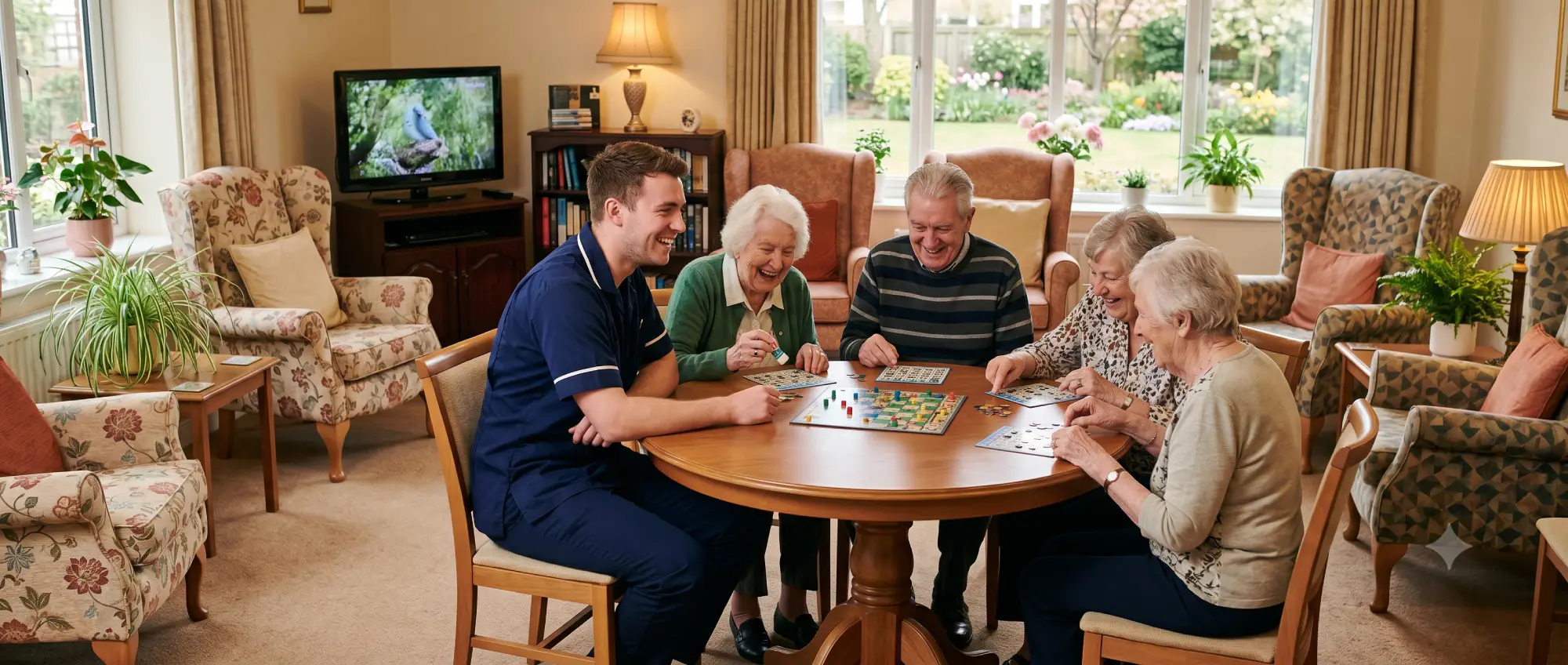
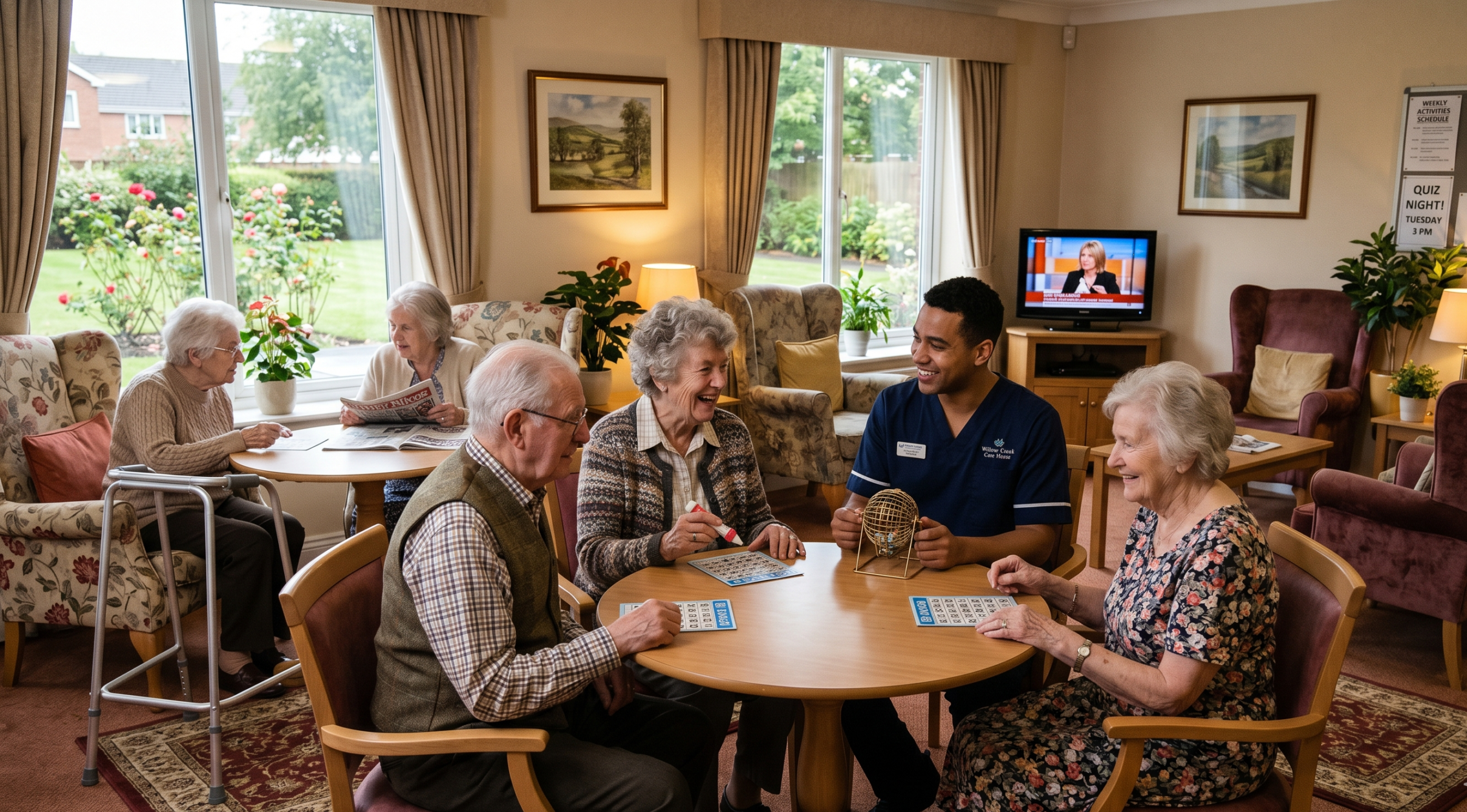
Daily life includes a full programme of activities designed around mental stimulation, physical wellbeing and meaningful connection, from quizzes and reminiscence sessions to music, crafts and outings. You can see the full range on our Activities & Wellbeing page. If your loved one is not quite ready for a permanent move, our short-term respite care also offers a practical way to trial residential care or give a family carer a genuine break.
To explore each of our homes in more detail, visit our Our Homes page.
Frequently Asked Questions
Is residential care only for people with dementia or serious illness?
No. Many residents choose residential care simply because they want company, support with daily tasks, and the reassurance of help being close by, not because of a specific diagnosis.
Can I try residential care before committing permanently?
Yes. Short-term respite stays are a common way for families to see how a home feels before deciding on a long-term move.
How do I know if home care is no longer enough?
If your relative is having frequent falls, becoming confused about medication, or a family carer is struggling to cope, it is worth discussing residential care options with your GP or a local care provider.
What makes a smaller care home different from a large one?
Smaller homes, such as our three 24-resident homes in Fulwood, allow staff to build real relationships with residents and respond quickly to individual needs, rather than managing care at scale.
Are JT Care Homes’ homes CQC rated?
Yes. All three of our homes, The Brooklands, Fairmont and Oxford House, are rated Good by the Care Quality Commission.
Making the Right Choice for Your Family
There is rarely a perfect moment to make this decision, but the right choice is the one that keeps your loved one safe, supported and genuinely happy, while giving your family peace of mind. Whether that means additional home support for now or a move to residential care, taking the time to understand both options is the best place to start.
If you would like to talk through your situation with a friendly, experienced team, we would be glad to help. Contact us today to arrange a visit to one of our Preston homes or to discuss your family’s needs.