Signs It May Be Time to Consider Residential Care
Families often delay the decision out of guilt, but waiting too long can put both the person with dementia and their carer at risk. Common signs include increasing confusion about medication, frequent falls or wandering, a carer at home reaching burnout, and safety incidents such as leaving the cooker on or getting lost nearby. If several of these are happening regularly, it’s worth starting the conversation about residential dementia care.
What Good Dementia Care Actually Looks Like
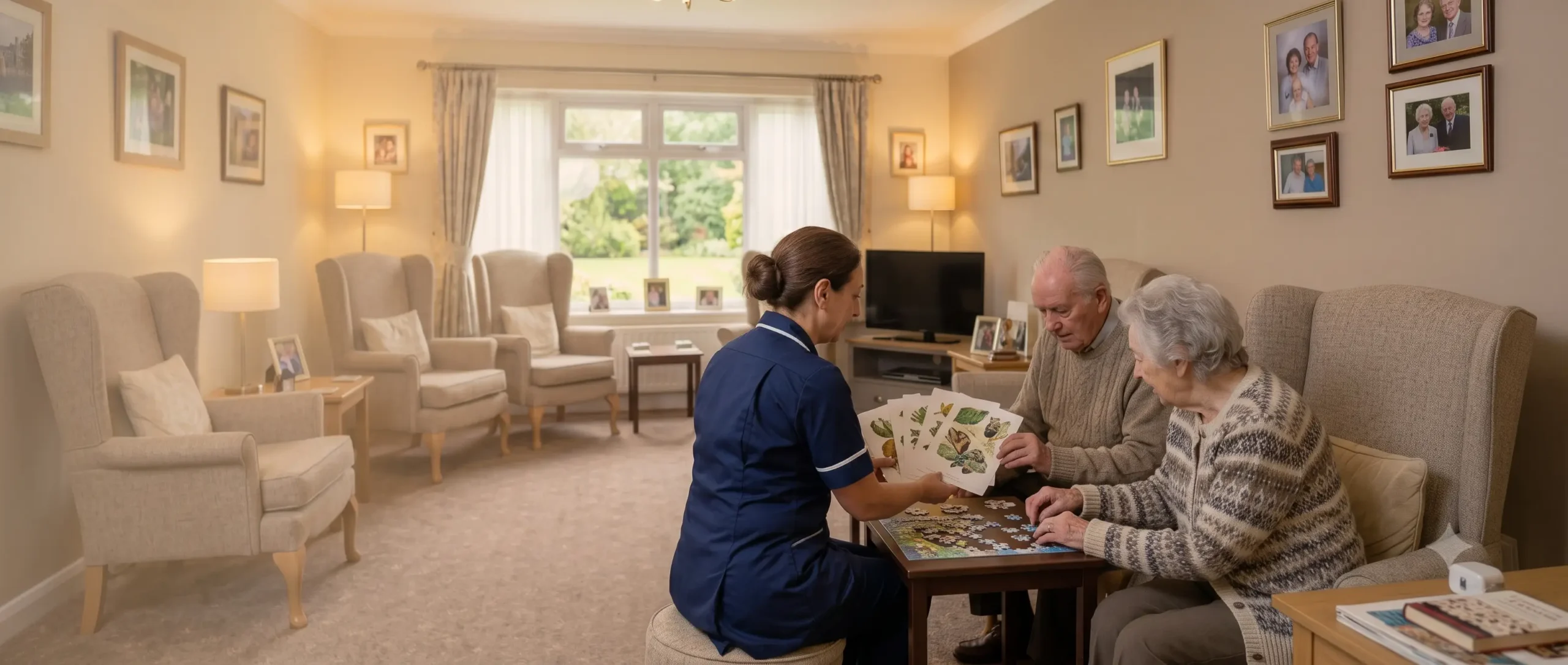
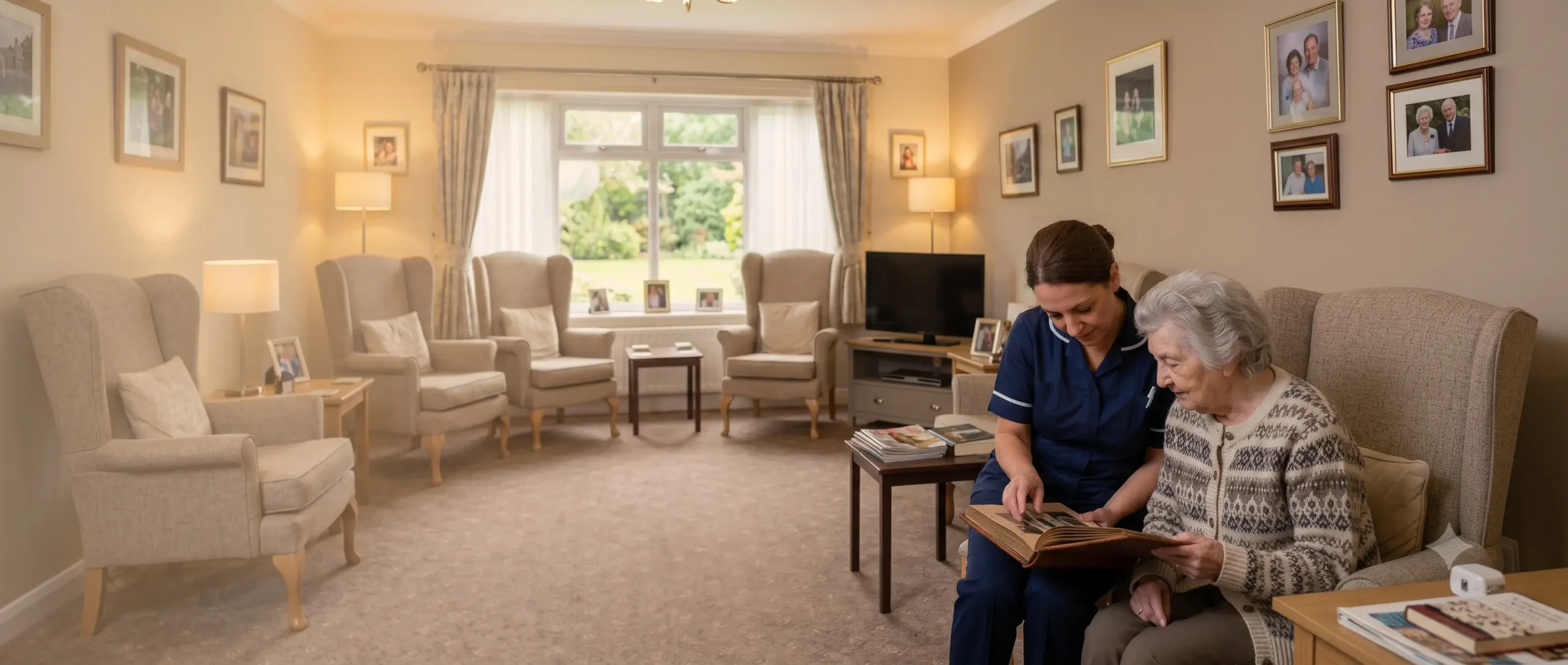
Dementia care is about far more than supervision. Staff trained in dementia support use consistent routines, clear and gentle communication, and reminiscence techniques such as familiar music or photographs to reduce anxiety and confusion. Look for homes where staff anticipate needs rather than simply reacting, and where residents with dementia are still included in daily decisions like meal choices and activities.
Why Smaller, Familiar Environments Help
Large, unfamiliar spaces can increase confusion and distress for someone living with dementia. Smaller care homes with consistent staff, familiar faces, and a homely layout tend to support orientation and reduce agitation. Ground-floor accommodation and clear, uncluttered corridors also reduce fall risk and help residents move around independently for longer.
The Role of Routine and Activities
Predictable daily routines are calming for people with dementia. A strong activities programme should include mental stimulation like simple quizzes and jigsaw puzzles, reminiscence therapy through sing-alongs and familiar objects, and gentle physical activity such as seated exercises. Ask any prospective care home how activities are adapted as dementia progresses, rather than offering a one-size-fits-all timetable.
Supporting the Wider Family
Good dementia care extends to the family too. Ask how the home communicates changes in condition, whether family members are welcome to visit and join activities, and what support is available for relatives who may be struggling with the emotional impact of the diagnosis. Open, honest communication from staff makes the transition easier for everyone involved.
Questions to Ask When Touring a Dementia Care Home
- What specific training do staff have in dementia care?
- How is the environment adapted to reduce confusion, such as signage and layout?
- How are behavioural changes and distress managed without over-medication?
- How often are care plans reviewed as needs change?
- What is the home’s CQC rating for the ‘caring’ and ‘safe’ domains specifically?
Family-Run Dementia Support in Preston
At JT Care Homes, our three Fulwood homes, Fairmont, Oxford House, and The Brooklands, have supported residents living with dementia since 1984. Our smaller, close-knit communities mean consistent staff and genuine, person-centred routines rather than a revolving door of carers. Explore our Activities & Wellbeing programme or contact our team to discuss your loved one’s needs and arrange a visit.
Making a Decision You Can Feel Good About
Choosing residential dementia care isn’t a failure of family care; it’s often the step that lets a partner or adult child go back to being a spouse or son or daughter, rather than a full-time carer. Take your time, visit more than once, and choose a home where staff clearly understand dementia, not just where the building looks the part.