Your loved one fell in their care home. You’re terrified. You replay scenarios: Could it have been prevented? Why wasn’t staff monitoring them? Is the care home safe?
Falls are the leading cause of injury in care homes. They’re also largely preventable. Understanding what causes falls, how care homes prevent them and what you can do helps ensure your loved one remains safe.
This guide explains fall risks, prevention strategies and how quality care homes prioritise safety while maintaining independence and dignity.
Why Falls Happen
Falls in older people result from multiple factors, rarely a single cause.
Physical changes with age. Reduced balance, slower reflexes, weaker muscles and vision changes increase fall risk. These changes are natural but require accommodation.
Medications. Some medications cause dizziness, drowsiness or balance problems. Medication reviews should consider fall risk.
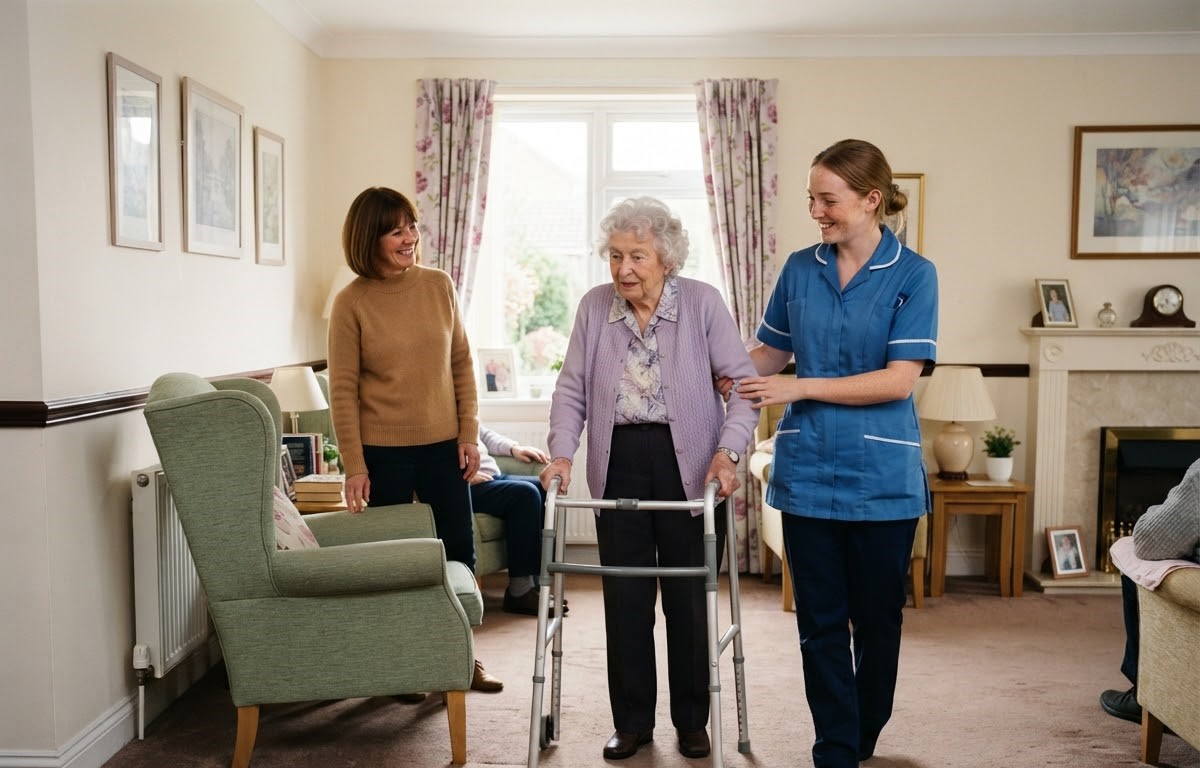
Mobility aids. Walking aids help but also increase fall risk if not used properly or maintained well.
Environmental hazards. Slippery floors, poor lighting, clutter and inadequate handrails increase falls. Environmental modification reduces risk significantly.
Rushing. Staff hurrying while assisting residents increases falls. Adequate staffing enabling unhurried care reduces falls.
Cognitive impairment. Dementia increases fall risk because residents may not remember fall risks or use safe strategies.
Deconditioning. Weakness from illness, inactivity or deconditioning increases falls. Exercise and activity reduce risk.
Medical conditions. Conditions like Parkinson’s, stroke effects or arthritis increase fall risk.
Most falls result from combination of factors. Effective prevention addresses multiple factors simultaneously.
How Care Homes Prevent Falls
Quality care homes have systematic fall prevention programmes.
Comprehensive assessment. On admission, assessment identifies individual fall risks: balance problems, vision issues, medications affecting balance, mobility limitations. This assessment guides individualised prevention strategies.
Environmental modifications. Handrails in hallways and bathrooms. Non-slip flooring. Adequate lighting throughout. Clutter removed. Furniture arranged for safe movement. These modifications eliminate environmental hazards.
Mobility aids. Walkers, canes, wheelchairs and other aids enable safe mobility. Aids must be properly fitted and maintained.
Medication review. Medications affecting balance are identified. Doses are adjusted or alternatives suggested. Medication timing is optimised to minimise dizziness during high-activity times.
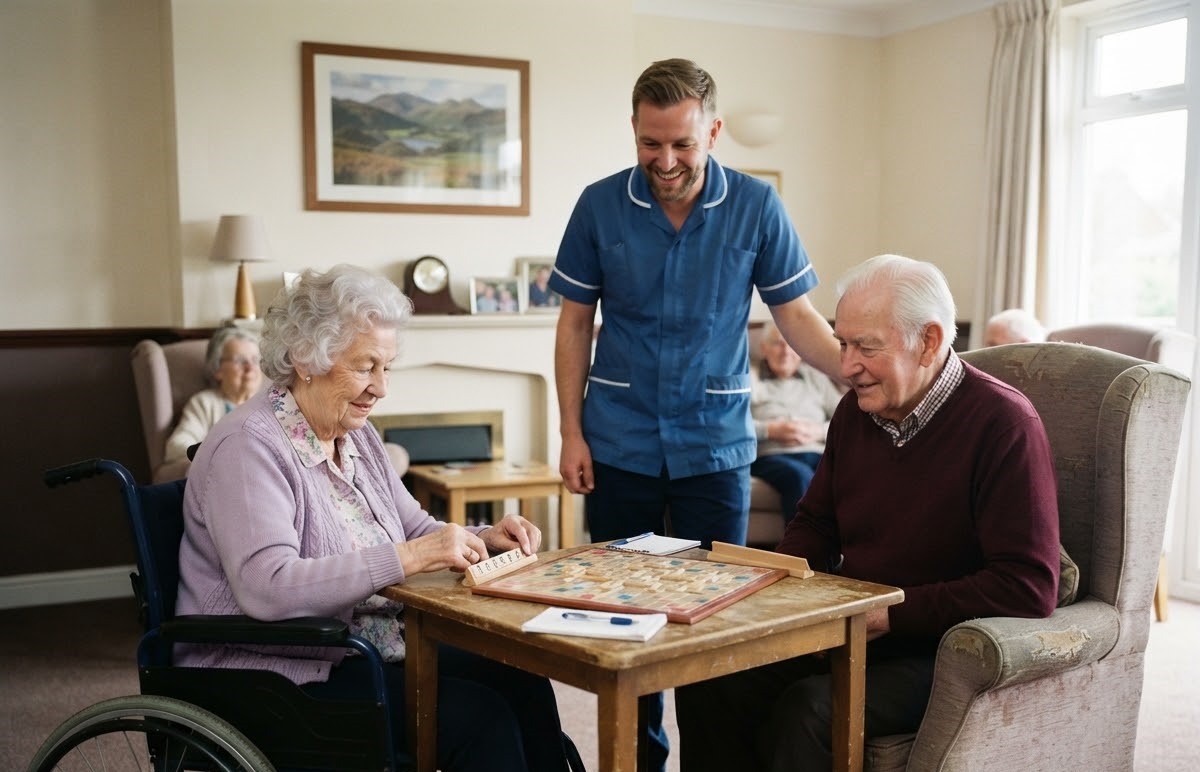
Exercise and activity programmes. Regular movement and exercise maintain strength, balance and confidence. Our activities and wellbeing programmes include movement activities supporting strength and balance.
Adequate staffing. Staff must have time to assist residents safely without rushing. Adequate staffing enables unhurried, careful assistance.
Footwear review. Proper footwear with non-slip soles and good support reduces falls. Slippers and unsecured footwear increase risk significantly.
Vision care. Ensuring glasses are available and vision checked regularly prevents falls from poor vision.
Toileting schedules. Regular toileting reduces urgency-driven falls when residents rush to toilet.
At JT Care Homes, fall prevention is integrated into our person-centred care approach. Each resident has individualised fall prevention plan addressing their specific risks.
Understanding Individual Risk
Fall risk varies dramatically by individual. Understanding your loved one’s specific risks helps you support prevention.
Recent surgery or illness. Recovery periods mean deconditioning and increased fall risk. Extra precautions during recovery are essential.
Recent medication changes. New medications affecting balance increase fall risk. Adjustments often reduce this.
Cognitive changes. Memory loss or confusion affects safety awareness. Reminders and monitoring become more important.
Vision changes. New glasses prescriptions or worsening vision increase falls. Regular vision checks are important.
Mobility changes. New mobility aids or increasing dependence require adjustment. Reassessment of home environment and assistance approaches is needed.
Seasonal factors. Winter increases falls (ice, reduced activity, fewer outdoor activities). Increased vigilance during winter helps.
Staff at quality care homes regularly reassess fall risk as residents change. They communicate with families about risk factors and prevention strategies.
What to Do If Falls Occur
Despite best prevention, some falls happen. How care homes respond matters.
Immediate care. After a fall, staff assess for injuries. Medical attention is sought if injuries are suspected. Comfort and reassurance are provided.
Incident documentation. Falls are documented: what happened, where, what time, any injuries, contributing factors. This documentation enables learning.
Investigation. After each fall, care homes investigate why it happened. Was environmental modification needed? Did medication contribute? Was assistance timing wrong? Investigation identifies prevention opportunities.
Family communication. You’re informed promptly about falls. Detailed explanations help you understand what happened and trust that care home is responding appropriately.
Prevention plan adjustment. Based on investigation, fall prevention plans are updated. New strategies prevent recurrence.
Reassurance to resident. Falling is traumatic. Staff provide reassurance and support helping residents regain confidence without developing fear-based immobility.
Quality care homes treat falls as learning opportunities, not failures to hide.
Balancing Safety and Independence
The challenge is preventing falls without eliminating independence and activity.
Overly restrictive approaches—keeping residents immobile to prevent falls—actually increase falls through deconditioning and weakness. Residents need activity and movement to maintain strength and balance.
Good prevention enables activity while minimising risk. This requires:
- Appropriate assistance during high-risk activities
- Environmental modifications enabling safe independence
- Exercise programmes maintaining strength
- Realistic risk acceptance (some risk is acceptable for quality of life)
Your loved one might fall despite best prevention. That’s part of living. The goal isn’t eliminating all fall risk. It’s preventing preventable falls while enabling meaningful life.
Frequently Asked Questions
How common are falls in care homes? Falls are common. One-third of people over 65 fall annually. Care home residents are higher risk. But most falls are preventable through good prevention programmes.
What should I do if my loved one falls? Inform staff immediately. Ensure they’re checked for injuries. Ask what happened and how it will be prevented. Work with staff on prevention strategies.
Should my loved one use a walker if they’re at fall risk? Possibly. Walkers help but also increase falls if not used properly or if they create false confidence. Assess individual situation with care home.
Are restraints used to prevent falls? Restraints don’t prevent falls and increase other harms. Quality care homes don’t use restraints. Instead they use prevention strategies, monitoring and appropriate assistance.
What if my loved one is afraid to move after a fall? Fear is normal but immobility increases deconditioning and future falls. Gentle encouragement, reassurance and graduated return to activity help. Psychology support might help process fall trauma.
How do I know if a care home takes fall prevention seriously? Ask about their fall prevention programme. Do they assess fall risk? Modify environments? Have exercise programmes? Investigate falls? Communicate about prevention? Detailed answers suggest strong programme.
Safety Enables Quality of Life
Safety in care homes isn’t about eliminating all risk. It’s about preventing preventable harm while enabling meaningful living.
Quality care homes systematically prevent falls through assessment, environmental modification, exercise, adequate staffing and individualised strategies. When falls occur, they investigate and learn.
Your loved one deserves to be safe. They also deserve to move, participate in activities and live fully. Good prevention enables both.
Ready to discuss fall prevention and safety at JT Care Homes? Contact us today. Our comprehensive fall prevention programme keeps residents safe while supporting independence and engagement.